Editor’s Note: This article was originally published in 2012, covering the highly anticipated announcement of the Leap Motion controller, a revolutionary touch-free 3D interface device.
An entirely new way to directly interact with your computers has arrived, which is more accurate than a traditional mouse, as reliable as a mechanical keyboard, and far more sensitive than a standard touchscreen. For the very first time, you can precisely control a computer in three dimensions simply with your natural hand and finger movements.
Introducing Leap Motion
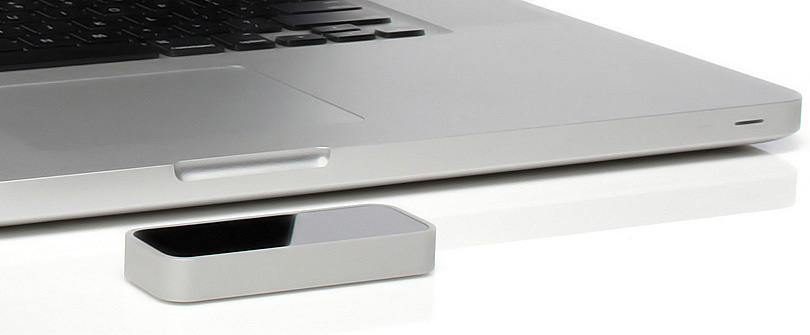
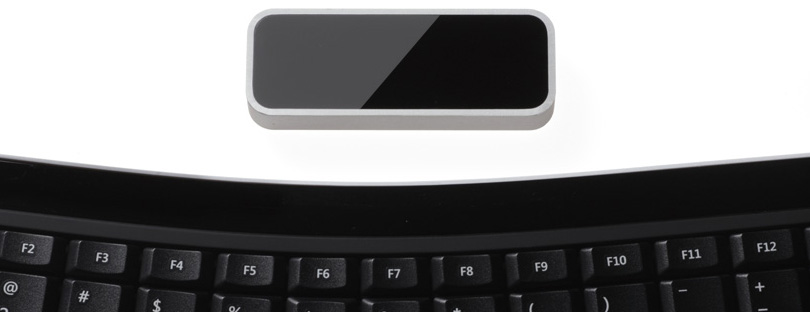
The Leap is an incredibly small, iPod-sized USB peripheral that creates an invisible 3D interaction space of 8 cubic feet to precisely interact with and smoothly control software on your laptop or desktop computer. It’s exactly like being able to reach right into the computer monitor and physically pull out information as easily as reaching into a cookie jar.
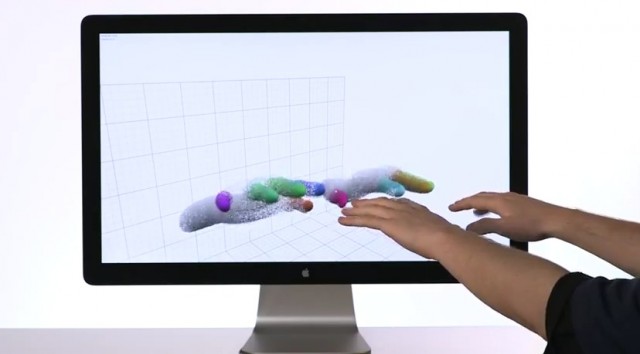
How the Technology Works
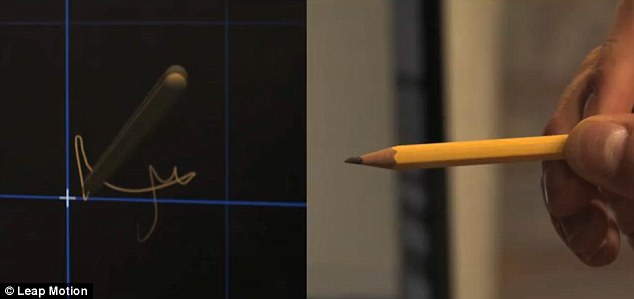
The Leap accurately senses your individual hand and finger movements entirely independently, as well as small items like a handheld pen. In fact, it’s significantly more sensitive than existing touch-free products and technologies. It’s the massive difference between crudely sensing an arm swiping through the air and being able to quickly create a highly precise digital signature with just a fingertip or a pen.

Just about the physical size of a small flash drive, the Leap can easily distinguish your individual fingers and flawlessly track your rapid movements down to an incredible 1/100th of a millimetre. No one needs a complex instruction manual for their own hands. And the next thing you know, a simple swipe in the air seamlessly leads to a swipe of the digital page. So that nice, expensive LED display remains completely clean and entirely untouched, exactly as it should be.
Leap Motion technology is a massive breakthrough in computer interaction, exclusively using a patented mathematical approach to precise 3D, touch-free motion sensing and highly advanced motion control software that’s unlike absolutely anything that currently exists on the consumer market.
Simple Setup and Powerful Potential
Setup is just as wonderfully intuitive. Plug the LEAP directly into a standard USB port. Load the proprietary Leap Motion software. Do a quick, simple wave to properly calibrate the sensor. That’s it. In mere minutes, you’ll be fully able to interact directly with your desktop using only natural hand and finger movements.
Two or three hundred thousand complex lines of code later, their engineering team have perfectly figured out how to use the Leap to reliably create a robust interaction space completely around your computer, in full 3D. It is highly capable of quickly distinguishing thumbs from fingers, and even handheld items like wooden pencils. This directly allows users to interact like never before, using only entirely natural physical movements.
It will seamlessly allow you to quickly create custom gestures that perfectly fit exactly how you actually want to use your computer. You can even securely network more than one Leap device together to create even larger, more complex interaction areas. The company confidently says it has successfully been able to smoothly link the Leap to dozens of popular applications and major operating systems.
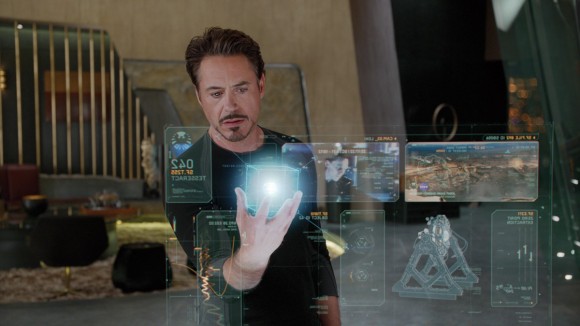
For decades, people have constantly been given a compelling dream of what computers would eventually be—from Star Trek to Tom Cruise aggressively swiping through Minority Report’s holographic 3D computer interface, and Ironman’s AI JARVIS computer. But it’s never successfully made it directly out of the expensive lab and into real life—until now. The unprecedented ability to fully control any computer with highly nuanced hand and finger movements will fundamentally transform the way normal people interact with computers every day.
The Future of Motion Control
Leap Motion is the only affordable technology heavily focused on actively bringing true motion control directly to the desktop—rather than just trying to clumsily take what’s been heavily built for living room TVs (large, imprecise gesture sensing) and forcefully make it work for desktop computers. We properly incorporate natural, fluid motions and precise finger tracking in far greater detail and extreme sensitivity than any competing product currently on the market.
And the underlying technology is certainly not just limited to desktop computers. Leap Motion CEO and co-founder Michael Buckwald said in a press statement: “In addition to the Leap for personal computers, our core software is versatile enough to be deeply embedded in a vast wide range of physical devices, closely including smartphones, tablets, modern cars, and even refrigerators.”
Features of the Leap
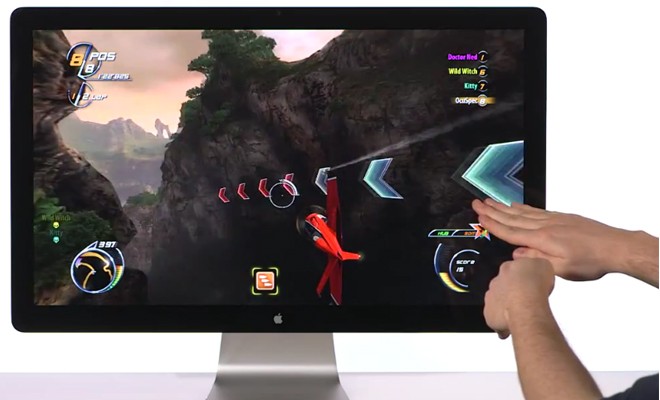
- Digital artists can use Leap to precisely emulate a drawing stylus or easily create stunning 2D and 3D images.
- Anyone can intuitively use Leap to interact seamlessly with Windows or Mac OS X by quickly clicking, grabbing, scrolling, and directly using familiar gestures like pinch to zoom safely in 3D space.
- Engineers can actively interact much more easily with highly complex 3D modelling software.
- Gamers can passionately play more easily, actively including fast-paced first-person shooters.
- Skilled surgeons can securely control 3D medical data entirely with their hands without dangerously taking off their sterile gloves.
- Perform basic computing tasks like smoothly navigating a dense operating system or quickly browsing through complex web pages.
- Securely signing a digital document merely by writing directly in the air.
- Seamlessly navigating large-scale 3D data visualisation systems.
- Creating and heavily manipulating complex 3D models like houses and cars.
“One day 3D motion control will be natively in just about every single device we interact with, and thanks entirely to the Leap, that incredible day is quickly coming far sooner than anyone expected. Mobile games like Angry Birds and Fruit Ninja are vastly more engaging than ever with a rapid physical swipe through the empty air instead of a boring swipe directly on a flat screen,” noted Buckwald.
