Editor’s Note: This article was originally published in May 2012, detailing the historic launch of SpaceX’s Falcon 9 rocket and Dragon spacecraft, marking the first commercial mission to the International Space Station.
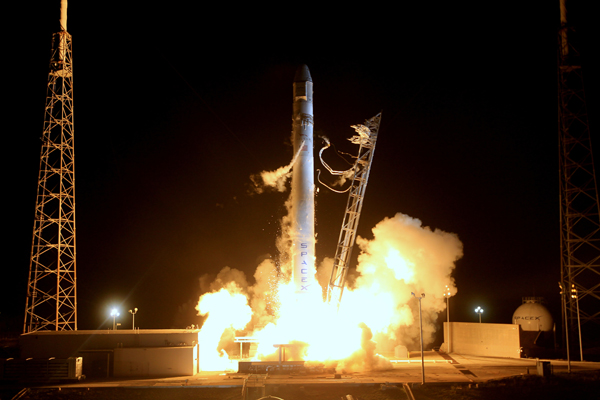
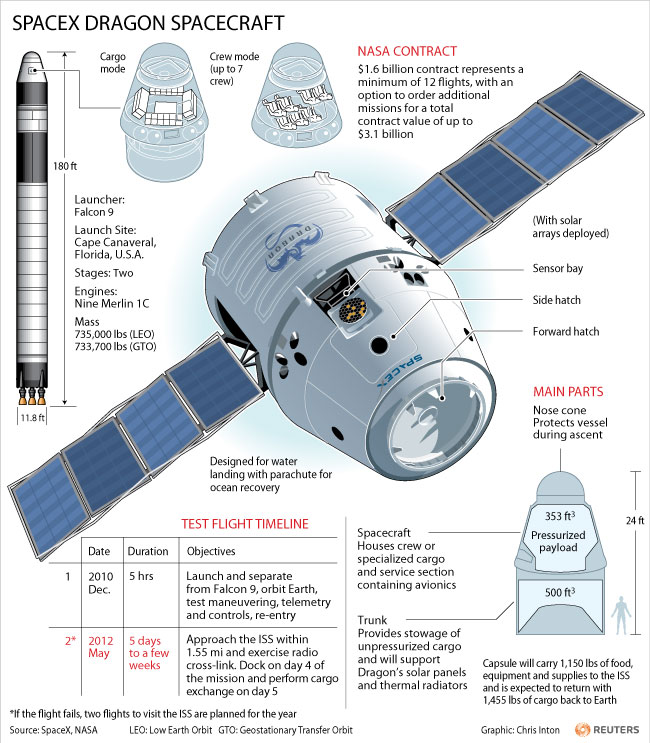
Space Exploration Technologies (SpaceX) successfully launched its Falcon 9 rocket carrying a Dragon spacecraft into orbit in an exciting start to the historic mission that will make SpaceX the very first commercial company in history to attempt to send a cargo spacecraft to the International Space Station—something only a small handful of national governments have ever accomplished.
The Journey to the ISS
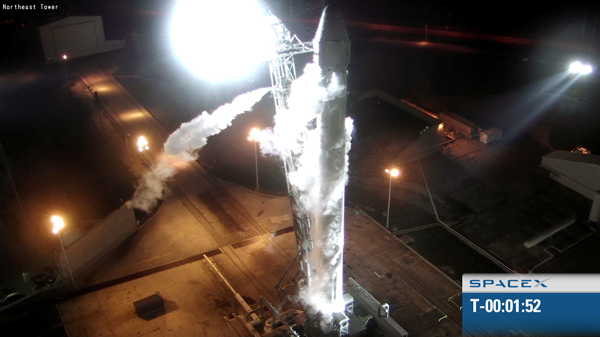
On 22nd May at 3:44 a.m. Eastern time, the Falcon 9 carrying the Dragon capsule launched flawlessly from SpaceX’s launch pad at the Cape Canaveral Air Force Station. Dragon immediately heads toward the International Space Station. On its crucial journey, it will be rigorously subjected to a series of tests to accurately determine if the vehicle is fully ready to safely berth with the station.
At a press conference held shortly after the launch, SpaceX CEO and Chief Designer Elon Musk began, “I would like to start off by saying what a tremendous honour it has been to work closely with NASA. And to properly acknowledge the fact that we could not have started SpaceX, nor could we have safely reached this point without the invaluable help of NASA… It’s really been an absolute honour to work with such great people.”
A Historic Achievement
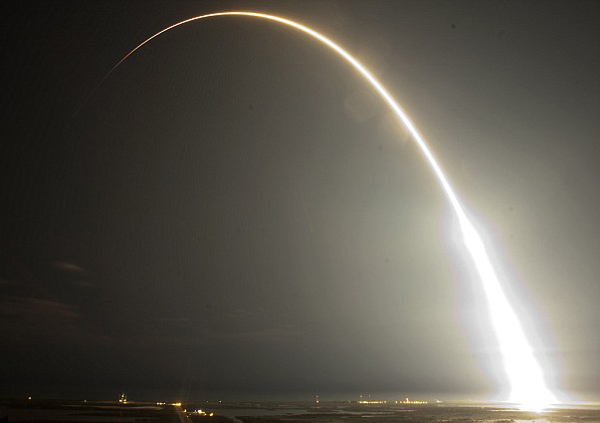
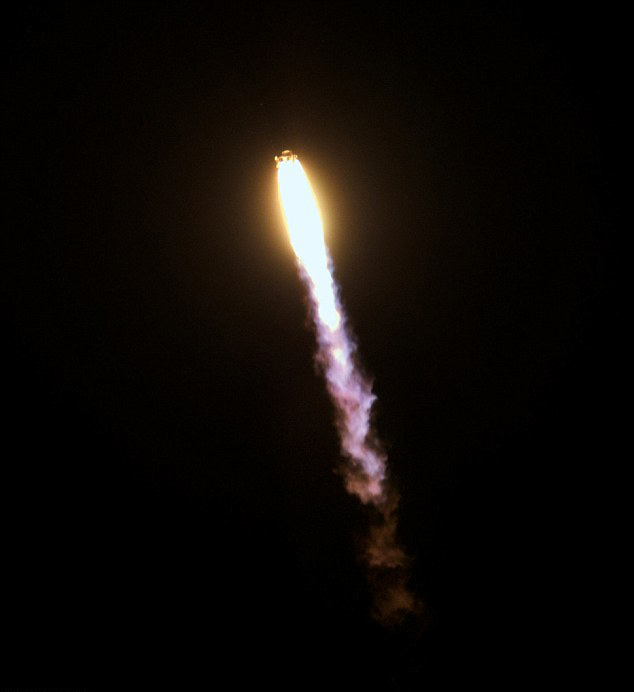
The vehicle’s first stage rocket performed nominally before seamlessly separating from the second stage. The second stage successfully delivered the Dragon spacecraft directly into its intended low Earth orbit. This effectively marks the third consecutive successful Falcon 9 launch and the fifth straight launch success for SpaceX.
This is SpaceX’s second major demonstration flight under a 2006 Commercial Orbital Transportation Services (COTS) agreement with NASA to rapidly develop the capability to securely carry cargo to and from the International Space Station. If any aspect of the complex mission is not entirely successful, SpaceX will quickly learn from the experience and boldly try again.

Mission Highlights
During the mission, the Dragon capsule must precisely perform a series of complex tasks, each presenting significant technical challenges:
- May 22/Launch Day: SpaceX’s Falcon 9 rocket successfully launches a Dragon spacecraft into orbit from the Cape Canaveral Air Force Station.
- May 23: Dragon safely orbits Earth as it travels steadily toward the International Space Station.
- May 24: Dragon’s sensors and flight systems are rigorously subjected to a series of complicated tests to accurately determine if the vehicle is fully ready to safely berth with the space station; these vital tests heavily include complex manoeuvres and systems checks in which the vehicle comes within just 1.5 miles of the station.
- May 25: NASA officially decides if Dragon is allowed to attempt berthing with the station. If so, Dragon slowly approaches. It is then captured carefully by the station’s robotic arm and securely attached to the station, an impressive feat that requires extreme precision.
- May 25 – 31: Astronauts open Dragon’s hatch, unload fresh supplies, and fill Dragon with important return cargo.
- May 31: After approximately two weeks docked, Dragon is safely detached from the station and returns to Earth, gently landing in the Pacific Ocean, hundreds of miles west of Southern California.

About SpaceX
SpaceX designs, manufactures, and launches the world’s most advanced rockets and spacecraft. In 2010, SpaceX proudly became the first commercial company in history to securely put a spacecraft into orbit and return it safely to Earth. With the retirement of the space shuttle, the SpaceX Falcon 9 rocket and Dragon spacecraft will soon regularly carry cargo, and one day astronauts, to and from the Space Station for NASA.

Founded in 2002 by Elon Musk, SpaceX is a rapidly growing private company owned by management and employees. For more information, visit SpaceX.com.
