Editor’s Note: This article was originally published in 2012, detailing early propulsion technology designed to help small satellites tackle the growing problem of space debris.
A tiny ion powered satellite thruster which can journey to the Moon on just one tenth of a litre of fuel could usher in a new low-cost space age. The mini-motor weighs just a few hundred grams and runs on an ionic chemical compound, using electricity to expel ions and generate thrust. The thruster will make its debut on a satellite that will clean up hazardous space debris.
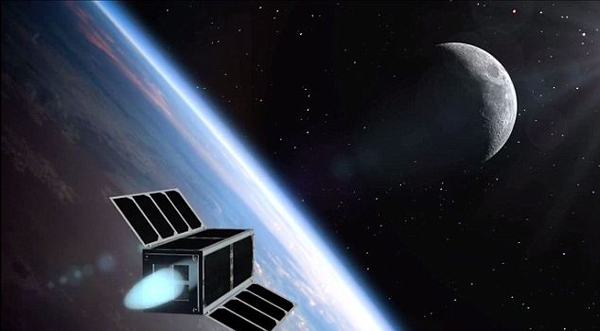
The MicroThrust Motor
The tiny motor is not built to blast satellites into orbit; instead, it is designed to help spacecraft manoeuvre once they are already in space, a task which previously required bulky and expensive engines. The MicroThrust motor will allow small satellites to easily shift direction while orbiting at immense speeds of over 25,000 mph.
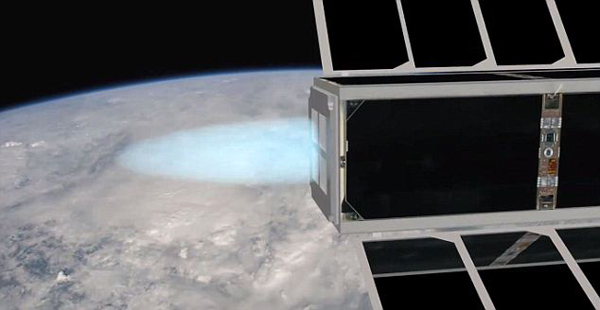
The first prototype was unveiled by EPFL laboratories, and the scientists hoped it could usher in a new era of low-cost space exploration. Tiny satellites are much cheaper than their bigger brothers but currently lack an effective propulsion system. EPFL hopes its MicroThrust motor, which allows satellites to shift direction while travelling at 40,000 km/h, could be the perfect answer.
Journeying to the Moon
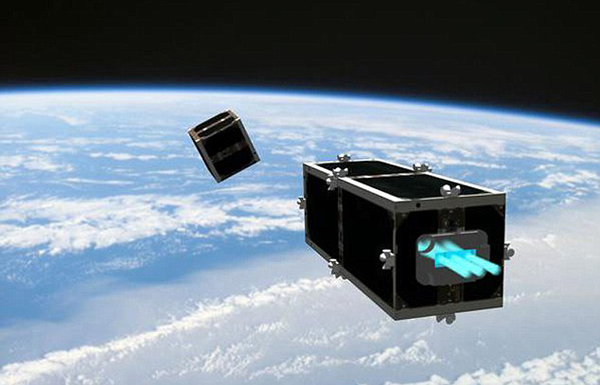
Herbert Shea, of EPFL, said: “At the moment, nanosatellites are stuck in their orbits. Our goal is to set them free.” EPFL scientist Muriel Richard added: “We calculated that in order to reach lunar orbit, a 1-kg nanosatellite with our motor would travel for about six months and consume just 100 millilitres of fuel.”
Cleaning Up Space Debris
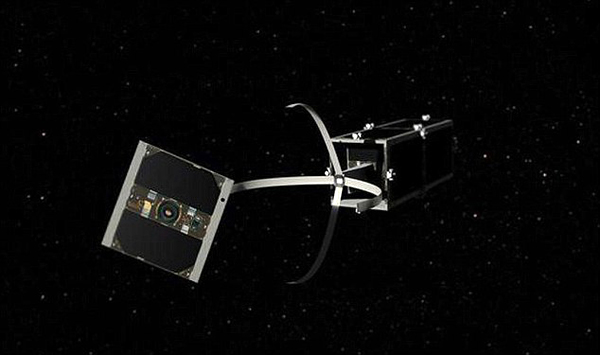
It is due to be used on CleanSpace One, a satellite under development at EPFL that is intended to actively clean up space debris. The satellite will grab lumps of orbiting debris and intelligently throw them back into Earth’s atmosphere, where they will safely burn up on re-entry.
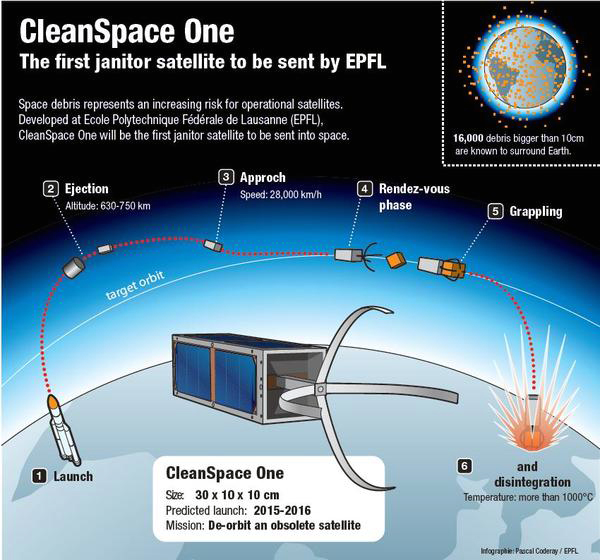
The 10-million-franc (approximately $11-million) satellite, called CleanSpace One, is being built by the Swiss Space Center at the Swiss Federal Institute for Technology in Lausanne.
After its launch, the cleanup satellite will have to constantly adjust its trajectory in order to accurately match its target’s orbital plane. To do this, it will use the new kind of ultra-compact motor designed for space applications that is being developed in EPFL laboratories.
The Gripping Mechanism
When it gets within range of its target, which will be travelling at an altitude of 630-750 km, CleanSpace One will grab and stabilise it. This is a mission that is extremely dicey at these high speeds, particularly if the target satellite is rotating. To accomplish the task, scientists are planning to develop a highly advanced gripping mechanism inspired by plant and animal examples.
Finally, once it is securely coupled with the satellite, CleanSpace One will seamlessly de-orbit the unwanted debris by heading back into the Earth’s atmosphere, where the two satellites will be completely destroyed upon re-entry.

The scientists aim to aggressively launch the satellite and begin operations within three to five years.
