Ever since humanity first saw a bird fly, we have wanted to take to the skies. While early attempts to fly like birds were unsuccessful, the idea of the aeroplane evolved over the past 2,500 years, beginning with ancient Greek science.
The Da Vinci Code
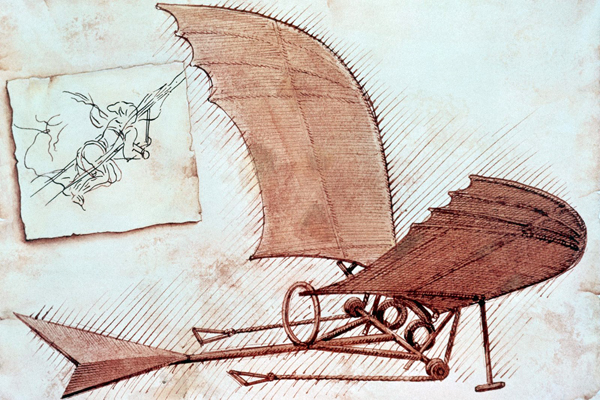
Leonardo Da Vinci was possessed by the idea of flight. He designed a number of ornithopters toward the end of the 15th century. In his surviving manuscripts, there are more than 35,000 words and 500 sketches dealing with human flight.
Taking Off: The First Flights
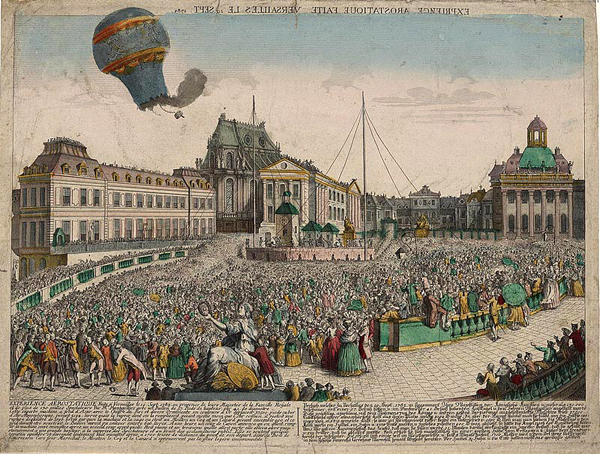
The first successful air flight was achieved in a hot air balloon in 1783. Because heated air is lighter than cold air, it caused the balloon to rise into the sky. Later, the first aeroplane flown with wings was a glider. Gliders are non-motorised flying machines, making them notoriously difficult to control.
A man named Sir George Cayley made the first glider that actually flew. Fast forward to the 1890s, Orville and Wilbur Wright became deeply interested in flying while working in their bicycle shop.
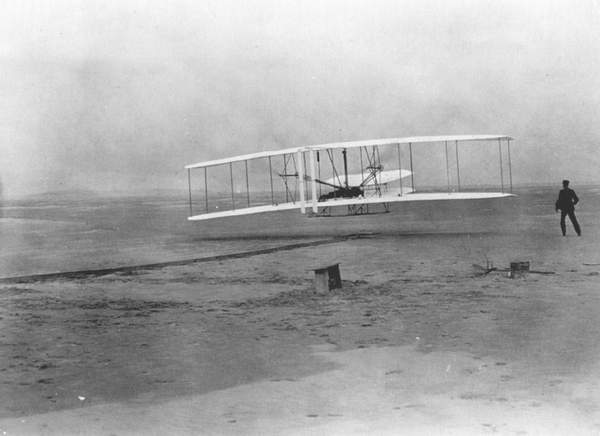
On December 17, 1903, the Wright brothers made the first successful powered flight. They completed three successful flights that day, but Wilbur made the longest flight of 892 feet, staying airborne for about 59 seconds. The Wright Flyer was powered by a 12-horsepower engine they had built themselves.
The development of the powered aeroplane is widely considered one of the most appreciable technical inventions of the 20th century. Today, aeroplanes are an integral part of our everyday lives. To celebrate the evolution of flight, here are some of the most fascinating, super-fast aircraft ever developed, ranging from Mach 2 all the way to Mach 9.6.
McDonnell Douglas F-4 Phantom II
The McDonnell Douglas F-4 Phantom II is a tandem two-seat, twin-engine, all-weather, long-range supersonic jet interceptor. Originally developed for the United States Navy, it first entered service in 1960.

The Phantom is a massive fighter with a top speed of over Mach 2.23 (1,472 mph) at 40,000 feet. It can carry over 18,000 pounds (8,400 kg) of weapons across nine external hardpoints.
Lockheed SR-71 Blackbird
The Lockheed SR-71 “Blackbird” was an advanced, long-range, Mach 3+ strategic reconnaissance aircraft. Developed as a black project from the Lockheed A-12 in the 1960s by the famed Lockheed Skunk Works, it remains legendary.

Since 1976, it has held the world record for the fastest air-breathing manned aircraft. It boasts a staggering maximum speed of Mach 3.3 (over 2,200 mph).
MiG-25 Foxbat
The MiG-25 Foxbat is a supersonic interceptor and reconnaissance aircraft designed by the Soviet Union’s Mikoyan-Gurevich bureau. Entering service in 1970, it was among the fastest military aircraft ever built.
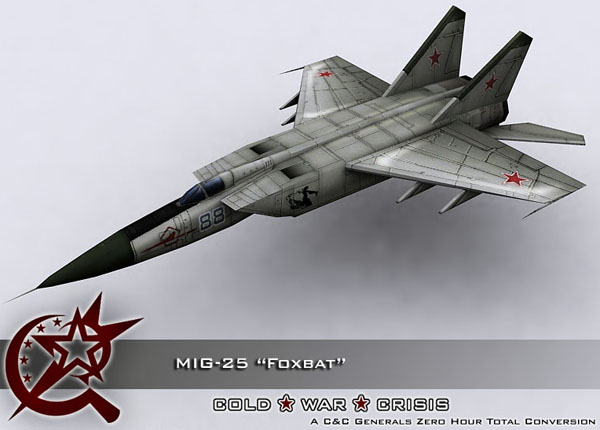
It had a top speed of Mach 2.83+ and could be pushed as high as Mach 3.2 (2,170 mph), though doing so risked causing significant damage to the engines.
Chengdu J-20
The Chengdu J-20 is a fifth-generation, stealth, twin-engine fighter aircraft developed by the Chengdu Aircraft Industry Group for the Chinese People’s Liberation Army Air Force (PLAAF).

Following high-speed taxiing tests in 2010, the aircraft officially entered service in 2017. It has a maximum operational speed of Mach 2.0.
Tornado ADV
The Panavia Tornado Air Defence Variant (ADV) was a long-range, twin-engine interceptor version of the swing-wing Panavia Tornado. The aircraft’s first flight was in 1979, and it formally entered service in 1986.
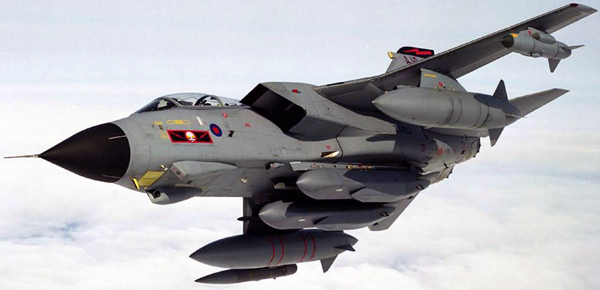
Originally designed to intercept Soviet bombers coming in from the East to strike the United Kingdom, it had a maximum speed of Mach 2.2 (1,480 mph).
Eurofighter Typhoon
The Eurofighter Typhoon is a highly agile, twin-engine, canard-delta wing, multirole fighter. The Typhoon serves multiple nations, including the Austrian Air Force, Italian Air Force, German Luftwaffe, British Royal Air Force, and others.

It can achieve a maximum speed of Mach 2.0 (1,550 mph).
McDonnell Douglas F-15 Eagle
The McDonnell Douglas (now Boeing) F-15 Eagle is a twin-engine, all-weather tactical fighter designed to gain and maintain air superiority in aerial combat. It is widely considered one of the most successful modern fighters, boasting over 100 aerial combat victories with zero losses in dogfights.
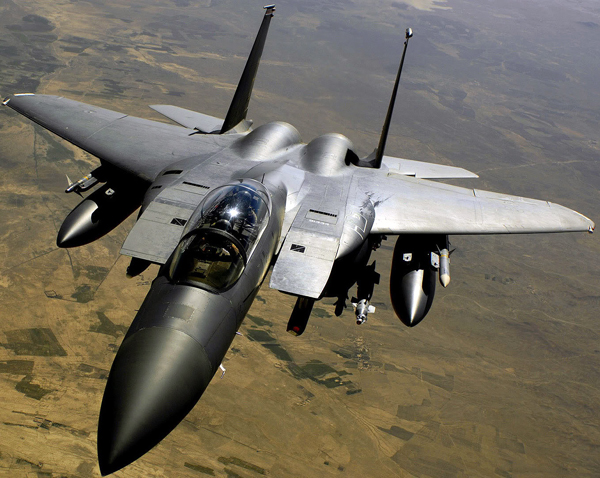
First flying in 1972 and entering service in 1976, the Eagle remains active today. It has a maximum speed of Mach 2.5+ (1,650+ mph).
North American XB-70 Valkyrie
The North American Aviation XB-70 Valkyrie was the prototype version of the proposed B-70 nuclear-armed deep-penetration strategic bomber for the USAF’s Strategic Air Command.

Designed in the late 1950s, the Valkyrie was a colossal six-engine aircraft able to fly at Mach 3+ at an altitude of 70,000 feet, which would have allowed it to avoid interceptors, which were the only effective anti-bomber weapons at the time.
Lockheed Martin F-35 Lightning II
The Lockheed Martin F-35 Lightning II is a family of single-seat, single-engine, fifth-generation multirole fighters designed to perform ground attack, reconnaissance, and air defence missions with advanced stealth capabilities.
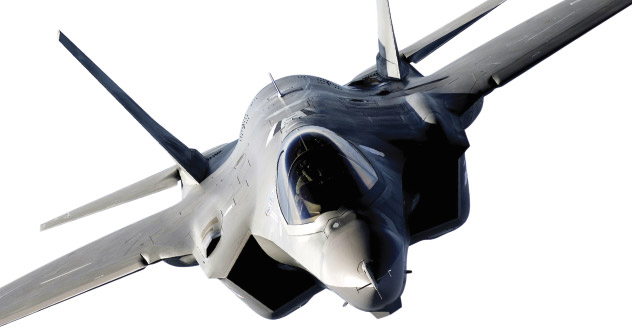
The F-35 has three main models: conventional takeoff and landing, short takeoff and vertical-landing, and carrier-based. It has a maximum speed of Mach 1.6+ (1,200 mph).
Sukhoi Su-57 (PAK FA)
The Sukhoi Su-57 (originally developed under the PAK FA program as the T-50 prototype) is a twin-engine stealth jet fighter developed by Sukhoi for the Russian Aerospace Forces. It is one of the few active fifth-generation stealth jet programs globally.

It has a maximum speed of Mach 2 (1,320 mph) and serves as the modern successor to the MiG-29 and Su-27.
Lockheed Martin F-22 Raptor
The Lockheed Martin F-22 Raptor is a single-seat, twin-engine, fifth-generation super-manoeuvrable fighter aircraft utilising cutting-edge stealth technology. Primarily an air superiority fighter, it also handles ground attack, electronic warfare, and signals intelligence.

Used exclusively by the United States Air Force, it has a maximum speed of Mach 2.25 (1,500 mph).
North American X-15
The North American X-15 rocket-powered aircraft was part of the X-series of experimental aircraft. The X-15 set speed and altitude records in the early 1960s, reaching the edge of outer space and returning with valuable data used in modern spacecraft design.

It holds the official world record for the fastest speed ever reached by a manned rocket-powered aircraft, hitting a staggering Mach 6.72 (4,520 mph).
NASA X-43A
The X-43 was an unmanned experimental hypersonic aircraft meant to test various aspects of hypersonic flight as part of NASA’s Hyper-X program. The X-43A more than doubled the top speed of the jet-powered SR-71.

Guinness World Records recognised NASA’s X-43A scramjet with a new world speed record for a jet-powered aircraft with an unbelievable speed of Mach 9.6, or nearly 7,000 mph, achieved during its final flight in 2004.
“The desire to fly is an idea handed down to us by our ancestors who, in their grueling travels across trackless lands in prehistoric times, looked enviously on the birds soaring freely through space, at full speed, above all obstacles, on the infinite highway of the air.”
Orville Wright