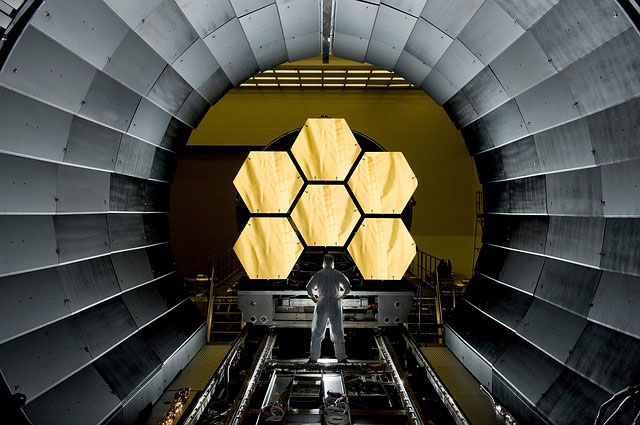
1. The Mysterious Universe and Dark Matter
Astronomers discover new galaxies every day. However, there is an amazing halo of mysterious, invisible material known as dark matter that engulfs galaxies and clusters of galaxies.
Dark matter came to the attention of astrophysicists in recent decades due to discrepancies between the mass of large astronomical objects determined from their gravitational effects. Astronomers still have no definitive idea what it is, yet it composes about 83% of the matter in the universe and 23% of its mass-energy.
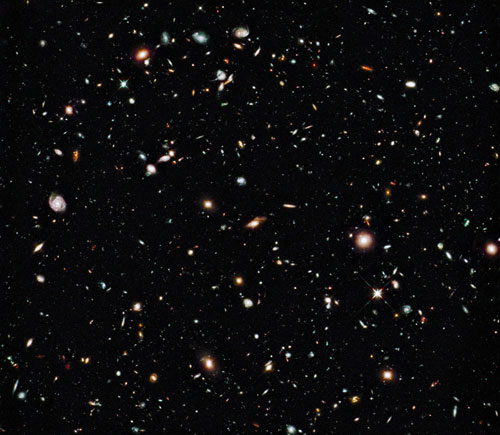
Dark matter was detected with the help of its gravitational effects, as it causes the stars in the outer regions of a galaxy to orbit faster than expected. During the evolution of the universe, dark matter helped materials clump together through gravity to produce galaxies, and it ultimately determines the fate of the universe. It is incredibly humbling to know that we are living in a universe where we cannot directly observe 83% of its contents.
2. The Nature of Time
Time is a system of sequential relations that any event has to any other, whether past, present, or future. It is a continuous duration in which events succeed one another. Time changes humans, yet humans cannot change time itself.
We cannot see, hear, smell, taste, or touch time. And yet, no one doubts that time dominates our lives. Our every move is dictated by this most elusive factor. Time slips continuously from the present into the past.
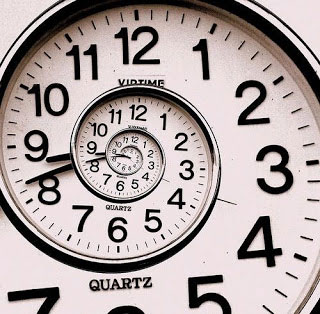
Albert Einstein was a man far ahead of his time. Only in recent decades have we been able to test some of his theories, such as the “twin paradox.” If an astronaut travels at nearly the speed of light while his twin stays home, the space traveller will return to find his sibling has aged significantly more. Time aboard the rocket slowed down, keeping the traveller young (a phenomenon requiring enormous speeds to observe).
3. The Mind, Brain, and Consciousness
Modern science cannot yet fully explain how consciousness, rationality, free will, or even our sense of self arises out of the merely material processes of the human brain.
Some experiences in life are hard to forget. Have you ever wondered how those memories get stored in the brain? Using modern brain-imaging, scientists are beginning to unravel the mechanisms responsible for creating memories. When you learn about something new, physical structural changes occur in your brain.
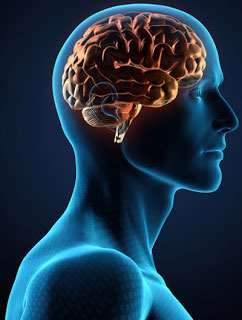
However, we do not fully understand what those changes are or how they are successfully retrieved decades later. Memory retrieval is perhaps even more mysterious than storage. When asked a simple question, you immediately get the answer from your brain, yet there is no complete practical theory to explain how memory retrieval happens so instantaneously.
Similarly, the underlying reasons for why we sleep remain a puzzle. While we know sleep is crucial for our survival, the exact biological purpose of dreams, which occur during our deepest Rapid Eye Movement (REM) sleep, remains a mystery.
4. Unidentified Anomalous Phenomena (UAPs)
An unidentified flying object (UFO), now more commonly referred to by governments as Unidentified Anomalous Phenomena (UAP), is an unusual anomaly in the sky that is not readily identifiable as any known object. While technically referring to anything unidentified, in popular culture, it has become synonymous with extraterrestrial spacecraft.
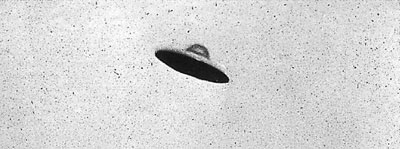
Many argue that some of these objects appear to display flight characteristics or shapes seemingly unknown to conventional human technology, a topic that continues to be heavily investigated by modern space and defence agencies.
Similarly, crop circles, which are sizable patterns created by the flattening of crops, continue to spark debate. While many have been proven to be human-made art installations or hoaxes, the sheer complexity and sudden appearance of some historical patterns keep the mystery alive for enthusiasts.
5. The Origins of Life
The Earth is estimated to be 4.54 billion years old. The earliest evidence for life on Earth comes from fossils of cyanobacteria (called stromatolites) found in Australia that are about 3.4 billion years old.
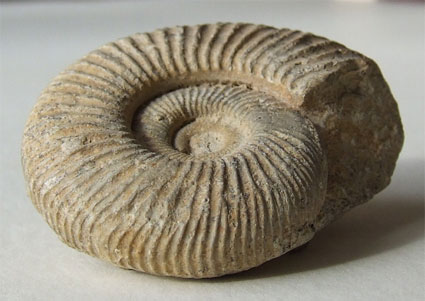
These bacteria are already biologically complex, featuring cell walls protecting their protein-producing DNA. Because of this complexity, scientists believe life must have begun much earlier, perhaps as early as 3.8 billion years ago.
Answering how life began from non-living matter would fill one of the largest gaps in our understanding of nature and have massive implications for the likelihood of finding life elsewhere in the universe. Despite knowing approximately when life first originated, scientists are still far from answering how it first appeared.
Conclusion
We do not know whether these grand mysteries of science will ever be completely solved. However, humanity will keep trying to find answers that make sense, building upon the work of the great minds that have helped us solve the intriguing mysteries of the past.
