Editor’s Note: This article was originally published in 2012, highlighting an early prototype of an airborne wind turbine developed by Altaeros Energies to harness high-altitude winds.
A new airborne flying wind turbine using blimp technology to safely reach powerful high-altitude winds has been successfully tested. It is a 10-metre wide, helium-filled inflatable turbine designed to maximise energy generation.
Boston-based Altaeros Energies, a US wind energy company formed out of MIT, proudly announced that it successfully generated energy from 350 feet up with an automated prototype of its airborne wind turbine (AWT).

Combining Old Design With Clean Tech
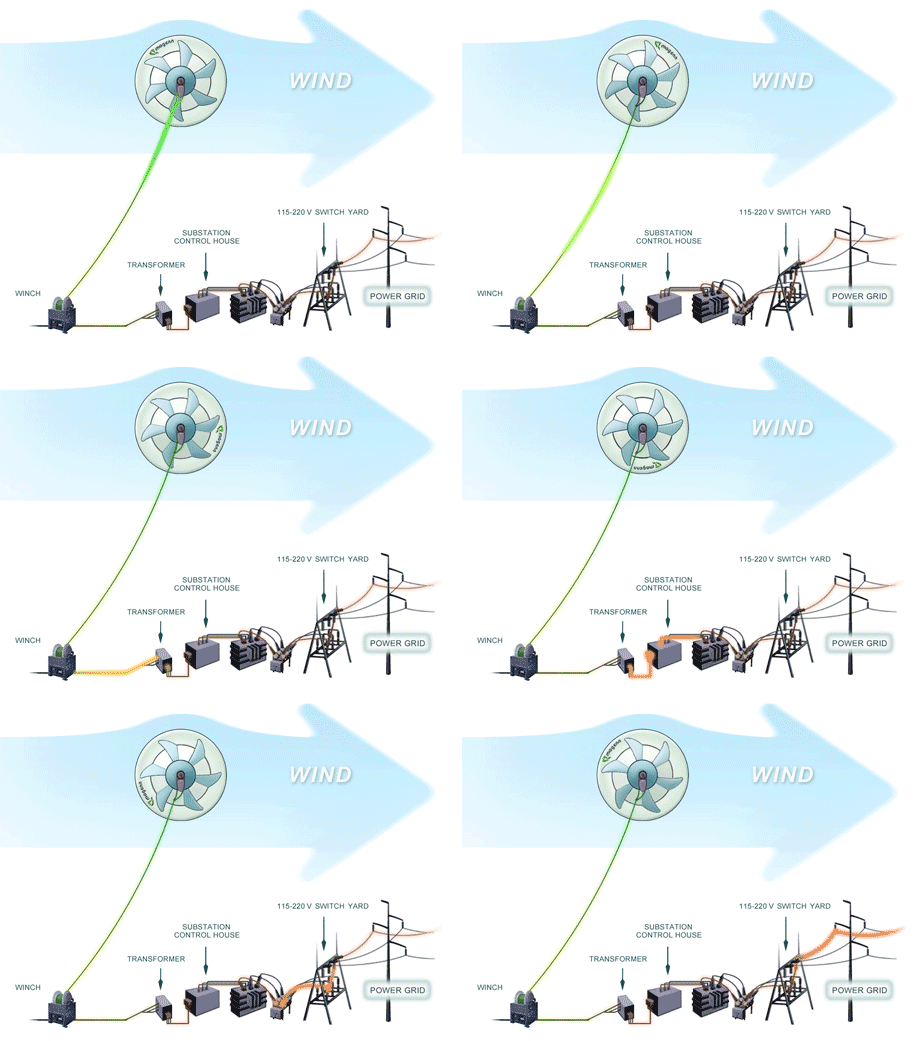
The AWT system is a smart combination of old world design and modern clean energy technology. The turbine cowling and inflatable shell, expertly fabricated in partnership with a Massachusetts sail-making company, is carefully filled with helium. The AWT is tethered by robust cables that effectively send the generated electricity back down to earth.
The entire system can be quickly packed up into a standard shipping container and deployed in a matter of days almost anywhere in the world. Invented by Ben Glass and Adam Rein, the AWT won the 2011 ConocoPhillips Energy Prize for “seeking to hoist a wind-turbine up to 2000 feet aloft.”
Harnessing High Altitude Winds
Altaeros says that because its product would harness higher-altitude winds, which are up to five times stronger than those reached by conventional tower turbines, it would drastically reduce energy costs by up to 65 percent and reduce typical installation time from several weeks to mere days.
There does appear to be an upper limit in terms of altitude where an airborne wind turbine will be commercially viable. Germany’s Max Planck Institute noted that the assumption that high wind speeds in the jet stream (7-16km above the surface) correspond with viable high wind power are incorrect, but the jet stream is far above the altitude Altaeros appears to have its immediate sights set on.
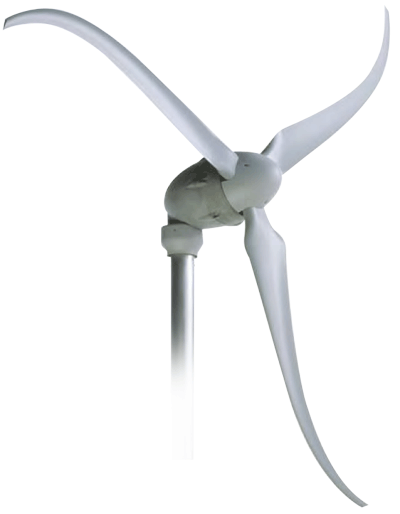
The original prototype was used to lift the top-selling Southwest Skystream turbine, which was able to produce more than twice the power at high altitude that was typically generated at conventional tower height.
Future Applications
A high altitude wind turbine could have many practical applications, including powering oil and gas sites, military bases, developing world villages, or aiding in rapid disaster relief. Massive, static wind farms could eventually become a thing of the past if a blimp-like power generator truly takes off.
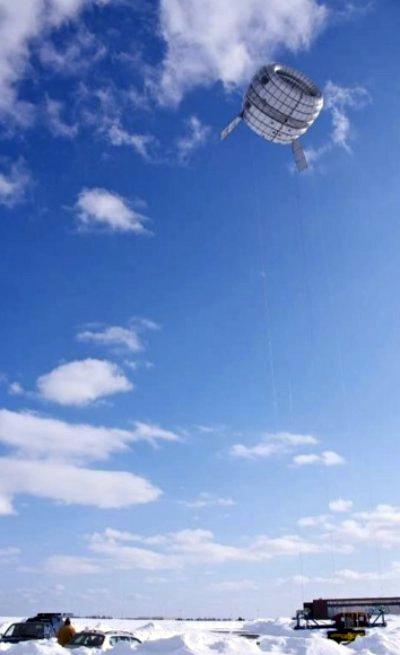
The completed commercial version would rest at roughly 1,000 feet, where winds are much stronger and more consistent, according to Altaeros Energies. The turbine was successfully transported and safely deployed into the air at the Loring Commerce Center in Limestone, Maine.
Altaeros says it based the core AWT design on “aerostats”, which are industrial blimps originally designed to lift heavy machinery and capable of withstanding severe hurricane winds. In addition, it is designed to have virtually no environmental or noise impact and to require very minimal maintenance.