Editor’s Note: This article was originally published in March 2012, highlighting the launch of the revolutionary Lytro Light Field Camera. While Lytro ultimately ceased operations in 2018, its early consumer hardware paved the way for modern computational photography. The article is preserved below for historical context.
The very first light fields were captured at Stanford University years ago. The most advanced light field research required a room full of cameras tethered to a supercomputer.
Lytro completed the job of taking light fields out of the research lab and making them available for everyone in the form of the world’s first Lytro Light Field Camera.
Understanding Light Field Technology
A light field is the amount of light travelling in every direction through every point in space. Conventional cameras cannot record the light field. Recording light fields requires an entirely new kind of sensor called a light field sensor.
This sensor captures the colour, intensity, and vector direction of the rays of light. This directional information is completely lost with traditional camera sensors, which simply add up all the light rays and record them as a single amount of light.

Focus After Shooting
With the Lytro light field camera, you can continuously readjust an image to focus on the foreground, middle, or background merely by clicking around the image. This also means it is nearly impossible to take an out of focus shot. You just aim and shoot, then focus later. Lytro calls these “living pictures.”
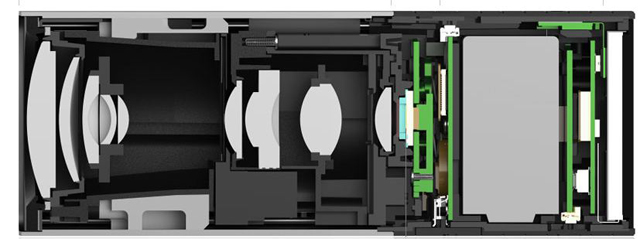
The core of the Lytro camera consists of the light field sensor hardware and light field engine software. The sensor, which looks flat and square like a fly’s eye, helps to capture all the light in every direction. A conventional photo focuses on one plane of that cube, whereas a light field camera captures the whole thing.
Megarays Instead of Megapixels
Instead of megapixels, Lytro measures the sensor’s power in terms of how many millions of rays of light it captures, such as 11 million light rays or 11 megarays.
The camera allows both the picture taker and the viewer to focus pictures after they are snapped, shift their perspective of the scene, and even switch seamlessly between 2D and 3D views.
The Legacy of Lytro
Lytro Inc. was a light field camera startup company founded in 2006 by Ren Ng, a light field photography researcher at Stanford University. The company’s first camera went on sale in October 2011 and shipped in February 2012.
The makers were a Silicon Valley startup that secured significant funding. The idea was not new, but early plenoptic cameras were room sized lens arrays attached to high powered computers. The Lytro was pocket sized and aimed to turn the world of photography upside down.
Light field cameras offer astonishing capabilities. With these amazing features, pictures become immersive, interactive visual stories that were never before possible.
