Are you a space geek? Do you have a passion for finding planets but don’t know how to begin? Planet Hunters is right here for you. Planet Hunters is a citizen science project created in collaboration between Yale University and Zooniverse.
The Kepler Space Telescope Mission
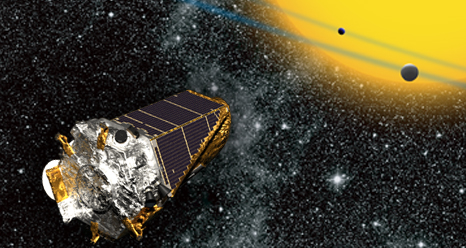
The Kepler space telescope was launched in March 2009 with a mission to find exoplanets orbiting around other stars using the transit technique. The Kepler telescope observes the field of stars in the Cygnus constellation.
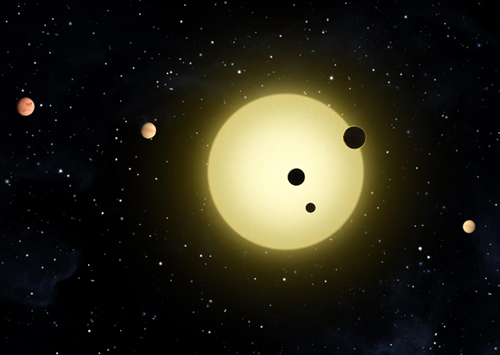
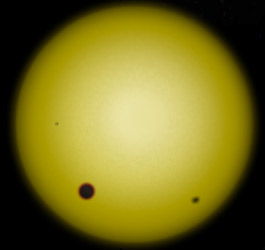
Whenever a planet passes in front of its parent star, it blocks some of the starlight, which causes a dimming in brightness. Kepler records the brightness of these stars every 30 minutes, and the data is beamed to Earth.
NASA provides this data to the public, as its mission is funded mainly by taxpayer dollars. This Kepler data is archived by NASA at the MAST Space Telescope Science Institute.
The Challenge of Finding Distant Planets
Sometimes finding planets becomes extremely difficult when they are orbiting far away from their parent star. These planets infrequently pass in front of the star. It is not only difficult for scientists but also for computer algorithms to identify them.
So, these planets can only be identified with the collective intelligence of people from all over the world. Together, human brains can recognise signals from this data to identify new planets and classify them according to their nature.
How You Can Help
As an internet user, you can work alongside thousands of planet hunters towards finding planets using the Kepler data. This data consists of brightness curves or light curves from more than 150,000 stars taken every 30 minutes.
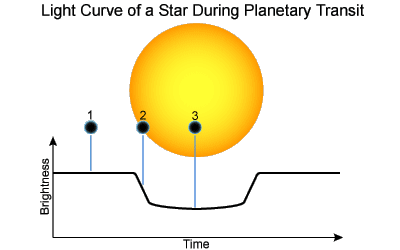
Users on the Planet Hunters website search for a dip in the brightness curve, which denotes a transit event. The dip in the brightness curve occurs when the planet passes in front of its parent star.
The team at Planet Hunters will assist you in finding planets by providing you with the exact methods used by scientists at NASA to identify them. Since 1995, more than 500 exoplanets have been discovered using different techniques.
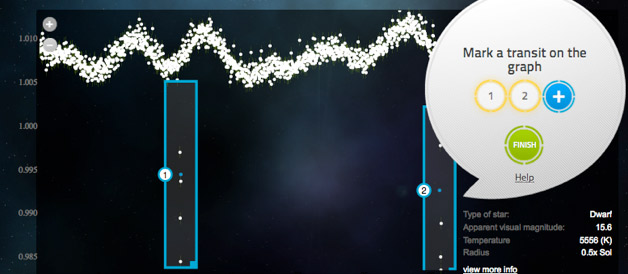
Results suggest that half of the stars in the sky have planets orbiting around them. Now it’s time to start hunting! Visit Planet Hunters.
Other Zooniverse Space Projects
Zooniverse offers various space science projects for volunteers to help scientists deal with large amounts of space data. Other projects include:
- Galaxy Zoo
- Moon Zoo
- Old Weather
- Solar Stormwatch
- The Milky Way Project
- SETILive
- Ancient Lives
- Cyclone Center
- Seafloor Explorer
- Bat Detective
- Whale FM
