Editor’s Note: This article was originally published in 2012, reporting on Google’s very first public preview of Project Glass, the highly anticipated augmented reality headset that aimed to revolutionise wearable technology.
Google Inc. provided an exciting preview of its Project Glass, the search giant’s augmented reality glasses created by the secretive Google X lab. It is a pair of incredibly thin shades that puts the company’s vast array of web services directly into your field of vision.
It can quickly snap photos, host video chats, send text messages, listen to streaming music, check local weather, respond seamlessly to notifications, share posts on Google+, and so much more.
A Day With Google Glass
Google displayed an engaging concept video shot entirely from the perspective of someone actually wearing the glasses. The wearer goes about his day calmly walking through New York City while effortlessly commanding the glasses to take a photo and post it to Google+, get block-by-block walking directions, check local weather conditions, and get a handy pop-up alert when a close friend is nearby.

Early images of the glasses on the official Google+ page depict a small, stamp-sized digital display that seems firmly attached to a sleek pair of glasses at the top corner of one of the lenses.
The glasses could eventually provide a lucrative way for Google to more closely entwine its advertising-supported online services—including web searches, maps, and email—into people’s daily lives.
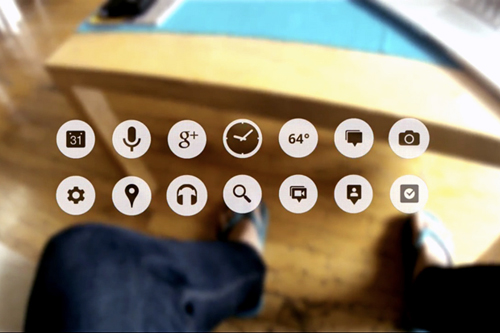
Voice Controlled Interface
These voice-command glasses could also easily help Google match some of the massive buzz that rival Apple Inc. had generated with its latest iPhone and the built-in Siri digital assistant, which takes spoken voice commands to execute tasks.
The glasses use the exact same microphone icon and other easily recognisable parts of Google’s mobile Android OS. The glasses are intuitively controlled using voice-activated icons that magically appear directly in the user’s field of vision.
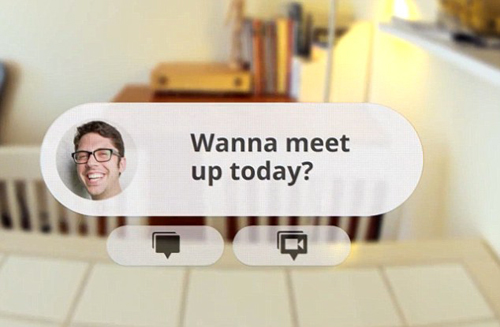
The glasses seamlessly layer digital information over the real world, and offer turn-by-turn directions, as well as allowing users to locate one another in the real world, similar to Google’s current Latitude system.
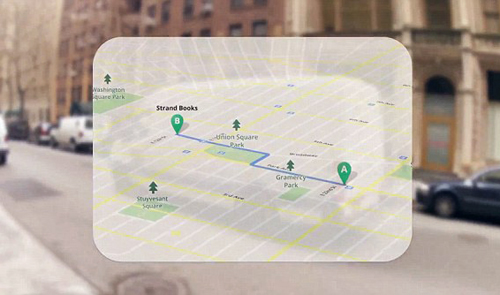
Social and Navigational Features
The service lets you instantly locate nearby friends in a very similar way to Google’s Latitude service. The concept video demonstration shows off accurate navigation information highly similar to what Google currently offers via its popular Maps service.

It visually shows the right path to your chosen destination with real-time traffic updates and deep details about surrounding places of interest.
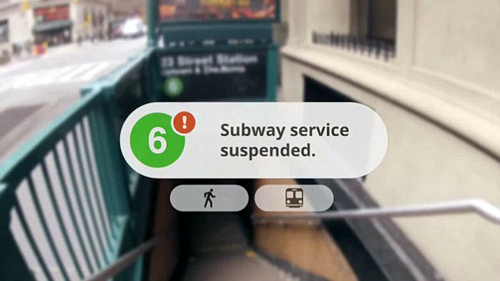
It remarkably allows you to have a live video chat on the go. The built-in camera lets your friend instantly see exactly what you see.
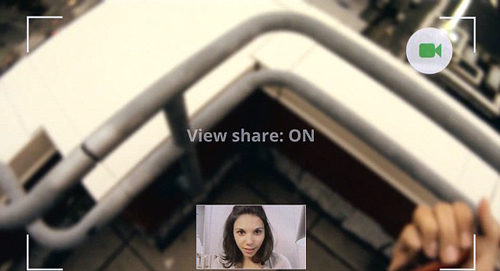
Development in Google X
The glasses were secretly developed in the highly secretive Google X lab as part of an initiative called “Project Glass”. Google X is where the search giant’s top engineers and scientists research and develop incredibly innovative ideas.

The glasses, which have been under heavy development for over two years, will soon be tested in public by select members of the Google team. No official commercial release date has been confirmed for the glasses just yet.
“We think technology should work for you—to be there when you need it and get out of your way when you don’t,” said Google.

“We’re sharing this information now because we want to start a conversation and learn from your valuable input. So we took a few design photos to show what this technology could look like and created a video to demonstrate what it might enable you to do,” said a post on the Google+ page devoted to Project Glass.
