400 scientists from 30 different countries gathered this week at the second Kepler Science Conference at NASA’s Ames Research Center in Moffett Field, California. Discussions were made on the results from the analysis of Kepler Space Telescope data.
NASA Kepler Mission Findings
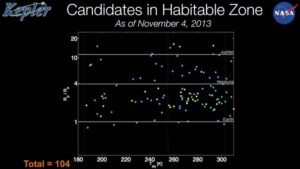
Findings include 833 new planet candidates in which ten of those are less than twice the size of Earth and orbit in their sun’s habitable zone (Goldilocks zone). They are at a distance from their star which allows liquid water to thrive on the surface.
During the first Kepler Science Conference, the Kepler team announced Kepler-22b. It is the first planet to be discovered in a habitable zone. Later, four habitable planets were discovered. Out of those, two planets were found to be in a single system.
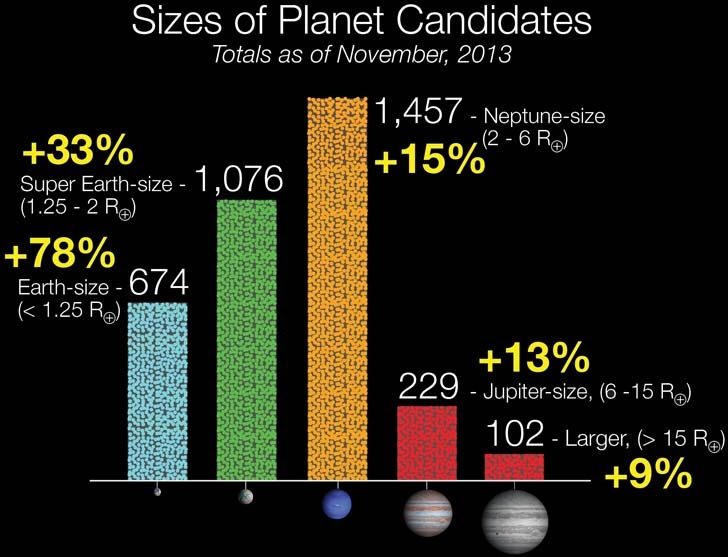
From the beginning until now, 3,538 planets have been discovered. Results show that most stars in our galaxy have at least one planet and smaller planets are more common.
Kepler data suggests that one in five stars like the sun is home to a planet up to twice the size of Earth orbiting in a temperate environment. This suggests that the majority of stars in the night sky may be home to planetary systems like our own solar system.
Kepler data is also useful for asteroseismology. It is the study of the internal structure of pulsating stars by interpreting their frequency spectra. Researchers examine sound waves generated by boiling motion beneath the surface of the star in a similar way geologists use seismic waves generated by earthquakes to probe the interior structure of Earth.
For more information about the Kepler mission, visit: http://www.nasa.gov/kepler
Credits: NASA, SETI
