Editor’s Note: This article was originally published in March 2012, capturing the excitement of the very first Raspberry Pi launch. It has been preserved and reformatted to reflect on the historical debut of this revolutionary microcomputer.
Like the Apple Mac and the Blackberry of its era, a small, highly anticipated computer called the Raspberry Pi (or Raspi) went on sale on February 29, 2012, and sold out within hours. The Raspberry Pi was a green-circuit, single-board computer about the size of a credit card, developed in the UK by the Raspberry Pi Foundation.

The Goal: Inspiring a New Generation
Created by a group of scientists, technicians, and developers, the project aimed to improve computer science knowledge among young minds in Britain and ignite their interest in programming. The founders noticed that fewer and less-qualified students were applying for computer science courses at Cambridge University.
“The primary goal was to build a low-cost computer that every child could own, and one where programming was the natural thing to do with it,” said co-founder Robert Mullins.
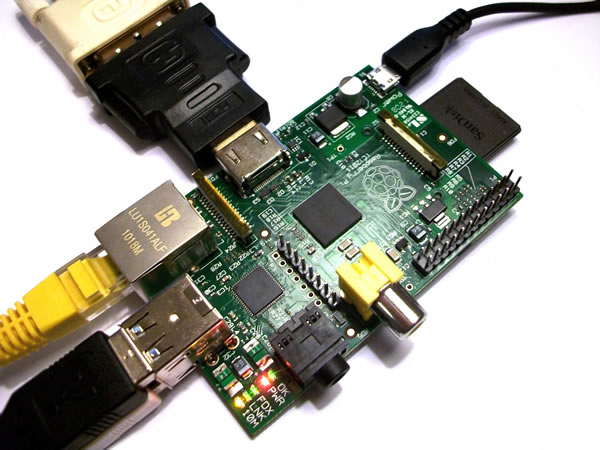
The Raspberry Pi was effectively the skeleton of a computer, showcasing the inner components of the mini PC. Inspired by legendary 1980s computers like the BBC Micro and the Commodore 64, the engineers set out to build a programmable machine for a new generation.
The Original 2012 Specifications
The processor was similar to those used in many smartphones of the era. It featured USB ports and an Ethernet port for internet connectivity. Despite its size, it could output 1080p video, boasted hardware-accelerated graphics, and could plug directly into any TV to power 3D graphics and Blu-ray video playback.
The design notably did not include a built-in hard disk or solid-state drive, relying instead on a standard SD card for booting the OS and long-term storage. Once a keyboard, mouse, and screen were plugged in, users could leverage open-source software to write their own code.
| Feature | Model A | Model B |
|---|---|---|
| Target Price | $25 (~£16) | $35 (~£22) |
| SoC | Broadcom BCM2835 (CPU, GPU, DSP, and SDRAM) | |
| CPU | 700 MHz ARM1176JZF-S core | |
| Memory (RAM) | 256 MB (shared with GPU) | |
| USB 2.0 Ports | 1 | 2 (via integrated hub) |
| Network | None | 10/100 Ethernet (RJ45) |
| Power Source | 5 volt via MicroUSB | |

A Massive Success
The first 10,000 units on release were funded largely out of the pockets of the scientists behind the charitable foundation. Shipped primarily to developers, the hope was that they would design software to enable children to design their own computer programs. As history has shown, the Raspberry Pi became a phenomenal global success, far exceeding those initial 10,000 units.
