Biological robots prove to be more efficient than electronic robots. A team of scientists from the iBionics laboratory at North Carolina State University used cockroaches to build a robotic insect instead of building robotic insects controlled by software.
From Earthworms to Cockroaches
Previously, we have seen Meshworm, a robot inspired by the movements of an earthworm, but it is an electrical robot rather than a biobot.
Now, scientists have successfully created a microchip to control the motion of a cockroach by stimulating its nerve endings to induce movements.
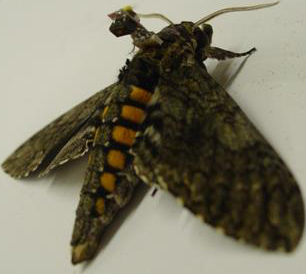
Dr. Bozkurt and his team also successfully used electronics to control the direction and speed of flight in hawk moths.
How the RoboRoach Works
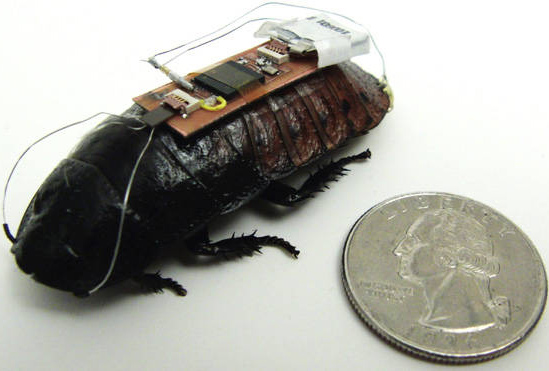
They chose the flightless Madagascar hissing cockroach due to its suitable size (5 to 7 cm) and two-year lifespan. They attached a Texas Instruments CC2530 SoC (System on Chip) and a battery weighing 0.5 grams to its back.
Two electrodes were fused with the cockroach’s antenna stumps, which helps in steering the insect by simulating an obstacle in its path. This induces the cockroach to change its course.
Two other sensors were connected to its sensory organs on the side of its body to simulate the approach of a predator, thus making it move forward.
Applications and Future Prospects
A wireless connection is added to control the movements of the cockroach. The video below shows the cockroach’s controlled movements on a curved path.
Cockroaches were selected for their ability to move through small gaps and ease of control. Scientists hope that these controlled insects could help collect and send information, find survivors after an earthquake, and even be used for spy purposes.
These electrically controlled insects are cost-effective, but the use of these insects in the lab might be opposed in the future by animal rights activists.
Credits: iBionics Laboratory (North Carolina State University)