Editor’s Note: This article was originally published in 2012, covering the early prototype phase of the PAL-V, an ambitious Dutch project aiming to make personal flying cars a reality.
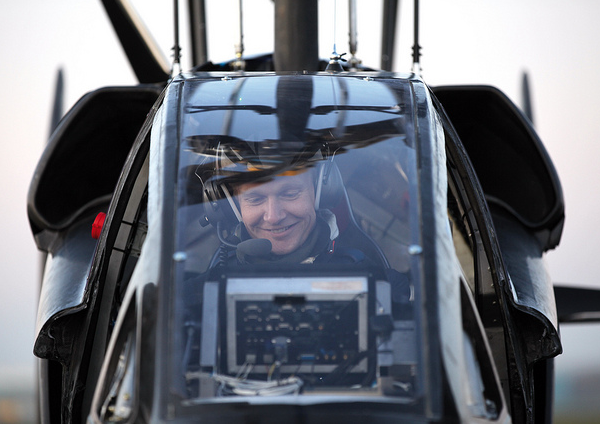
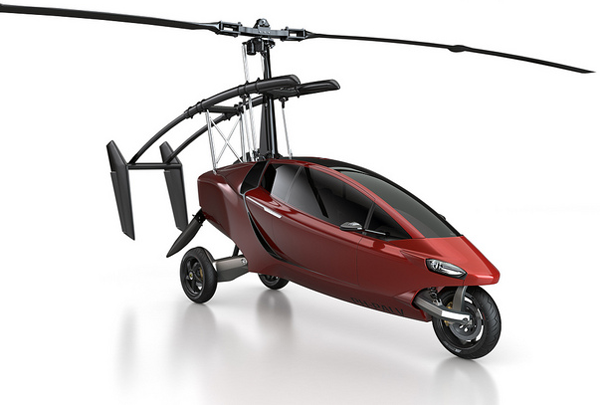
A Dutch company cleverly combined the core elements of a car and a helicopter into one amazingly expensive prototype flying car. This vehicle, named the PAL-V (Personal Air and Land Vehicle), has two seats, three wheels, and features an aerodynamic tilting mechanism towards the front corner. It is slim, remarkably light, and uses a rotor instead of traditional fixed aerodynamic wings.
Combining Automobile and Aircraft
The PAL-V is specifically designed to combine the agile handling of a motorbike with a mechanical-hydraulic dynamic tilting mechanism, automatically adjusting the tilt angle of the vehicle while cornering on the road.

It is powered by a reliable 160kW flight-certified gasoline engine and boasts a top speed of 180 km/h (112 mph) both in the air and on land. To safely convert from automobile to airplane, the vehicle’s engine must first be fully stopped.
In ground mode, the vehicle’s estimated fuel economy sits around 12 km/l (28 mpg), providing an impressive range of 350-500 km (220-315 miles) depending entirely on the specific model type, payload, and local wind conditions.

Future Powertrains and Flight Dynamics
Bio-diesel and bio-ethanol engine versions are actively planned for future production, designed to rapidly accelerate the vehicle from 0-100 km/h (62 mph) in under eight seconds. Flying a PAL-V is functionally very similar to operating a standard gyrocopter. It is significantly quieter than helicopters and quadcopters due to the much slower rotation of its main overhead rotor.

Measuring 4m (L) x 1.6m (W) x 1.6m (H) (13.1 x 5.2 x 5.2 ft), the PAL-V weighs roughly 680 kg (1,499 lb) and can carry a maximum load of 230 kg (507 lb) for a maximum gross weight of 910 kg (2,006 lb). The company insists the PAL-V fully complies with existing regulations in all major markets, making it completely legal for both road and air use. Obtaining a pilot’s licence requires only 20 to 30 hours of dedicated training.
The Transformation Process
Before take-off, the tail is fully extended, and the main rotor is unfolded in a mechanical process that takes less than 10 minutes. Upon starting the engine, the foldable push propeller emerges from the rear of the cabin to provide the necessary forward thrust. To seamlessly go from aircraft back to automobile, the process is simply reversed.
The company, PAL-V Europe, had been incredibly busy over the preceding seven years, having finally finalised the core design concept in 2008 and successfully testing a driving prototype in 2009. Although the finished vehicle looks slightly different to the initial computer renderings available in 2004, the overall design philosophy remains pretty much exactly the same.
Navigating the Airspace
When airborne, the PAL-V usually flies safely below 4,000 feet (1,200 m), which is the standard airspace available for uncontrolled Visual Flight Rules (VFR) traffic; thus, there will be no dangerous interference from heavy commercial air traffic. It can easily take off in many countries without the pilot needing to file a formal flight plan.
The company excitedly points out that governments in the U.S. and Europe are closely examining the development of “digital freeways” that utilise modern GPS technology to provide a safe, regulated corridor for such revolutionary vehicles.

Safety and Control
The PAL-V’s main rotor boasts a slower rotation than a traditional helicopter, making it far quieter and giving it the unique ability to take off and land at considerably lower speeds. The company says it is also much easier to control and mechanically cannot stall. Even if the engine completely fails mid-flight, it can be easily steered and landed safely as the main rotor keeps auto-rotating.
The prototype will, its ambitious creators claim, be totally legal on the ground and in the air, strictly according to existing international laws. The main flight power actually comes from the pusher rotors located securely behind the vehicle.

The PAL-V ONE has a very short take-off and landing capability, making it highly possible to land practically anywhere. Once the main engine stops, the rear propeller folds itself automatically back into the driving position. Pushing a button then safely lowers the rotor mast down into the horizontal position.

The military, as well as civilian emergency services, might easily be able to find incredibly good use for it, quite apart from standard commercial sales. Several highly successful test flights were quickly conducted, and the Dutch company hopes to attract enough wealthy investors to bring the PAL-V past the finish line and see it roll out of factories in due time.